

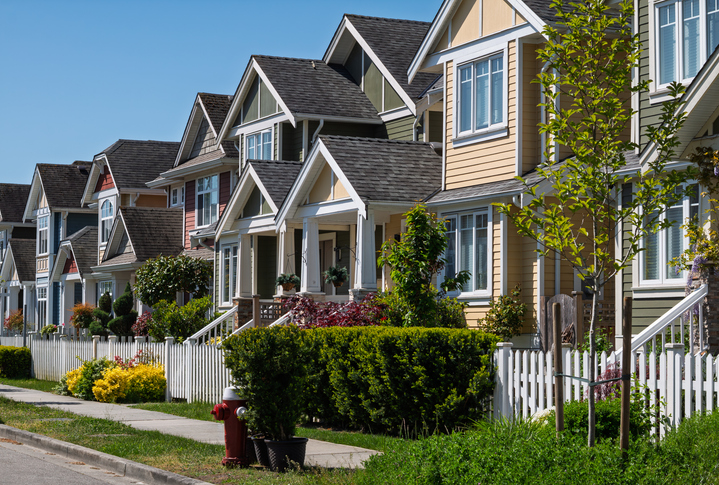
As we wrap up 2025, it’s clear that community associations continue to play a major role in how Americans live. It is also true that not every association gets everything right. There can be disagreements over rules, budgets, and decisions, and some communities face serious challenges. Even so, the most recent statistics nationally and in North Carolina show that the association model remains very popular. Most owners who live in homeowner or condominium associations say they see real value in the system and believe their communities help protect their homes and home values.
I recently saw the latest data on community associations nationwide and for North Carolina. Here are some of the more interesting details.
One point often overlooked in policy debates is that lawmakers mainly hear from unhappy owners who are in disputes with their associations. This can give a misleading picture. Happy or neutral owners are usually silent, while those with complaints speak loudly. Social media also tends to amplify stories of misbehavior or poor decisions by a few association leaders, rather than highlight the millions of owners who are satisfied and never make the news. A group of 100 or even 1,000 complaints might seem large, but North Carolina has almost 2.9 million residents living in associations. That means it would take about 29,000 owners to equal even 1 percent of all association residents in the state. For this reason, caution is important when considering changes to laws that already work well for most association homeowners.
As more local governments require associations to maintain critical infrastructure such as private streets and stormwater retention devices, it is also important that associations have the financial resources needed to meet those responsibilities. These duties can be expensive and long lasting, and strong budgets and reserves are essential for protecting both property and residents.
National Details
Recent national numbers from the Foundation for Community Association Research show that in the United States there are:
- about 369,000 community associations,
- with 77.1 million residents, and
- one out of every three homes in the country is part of an association.
In the early 1970s, there were only 10,000 associations, so the growth is remarkable.
Homeowner satisfaction continues to be strong.
- 86% rate their community association experience as very good, good, or neutral.
- 82% say their board serves the best interests of the community.
- 72% say their community manager provides value and support to residents.
The number of associations is expected to reach 370,000 to 374,000 communities by the start of 2026, which would mean 3,000 to 4,000 new associations this year alone.
Here are some additional national facts.
- About 77 million people live in associations nationwide.
- About one third of all homes in the United States are in community associations.
- Associations contribute about 121 billion dollars to the economy each year.
North Carolina Details
Our state mirrors these national trends. In North Carolina there are:
- almost 15,000 community associations,
- with 2.88 million residents, and
- 1.175 million homes in them.
For many buyers, owning and living in an HOA or condominium association is now the normal way to buy a home.
North Carolina associations also have a strong financial effect. Homeowners in these communities pay more than 6.2 billion dollars each year to maintain roads, stormwater systems, amenities, and landscaping. About 97,400 volunteers serve on boards and committees, with their donated time valued at 125 million dollars each year.
The typical home in a North Carolina association is worth about $325,800, and association homes tend to sell for at least 4 percent more than comparable homes outside associations.
Even with occasional problems, the data shows that community associations remain a trusted and widely supported form of housing. They shape neighborhoods, guide community decisions, and protect long term property values. In North Carolina and across the country, they will continue to grow and serve an important role in residential life.